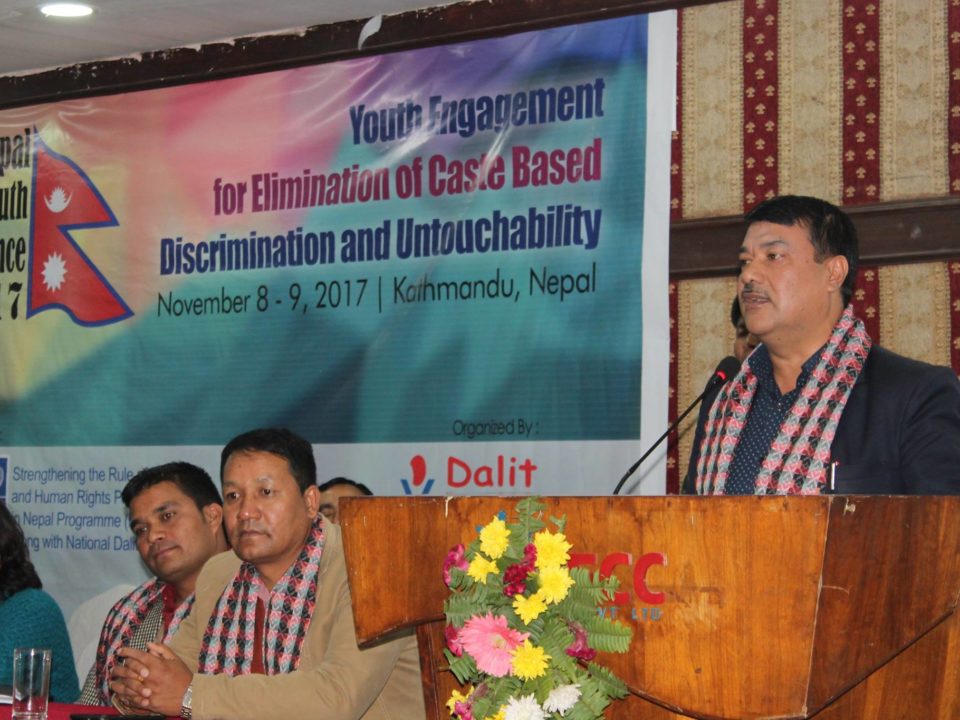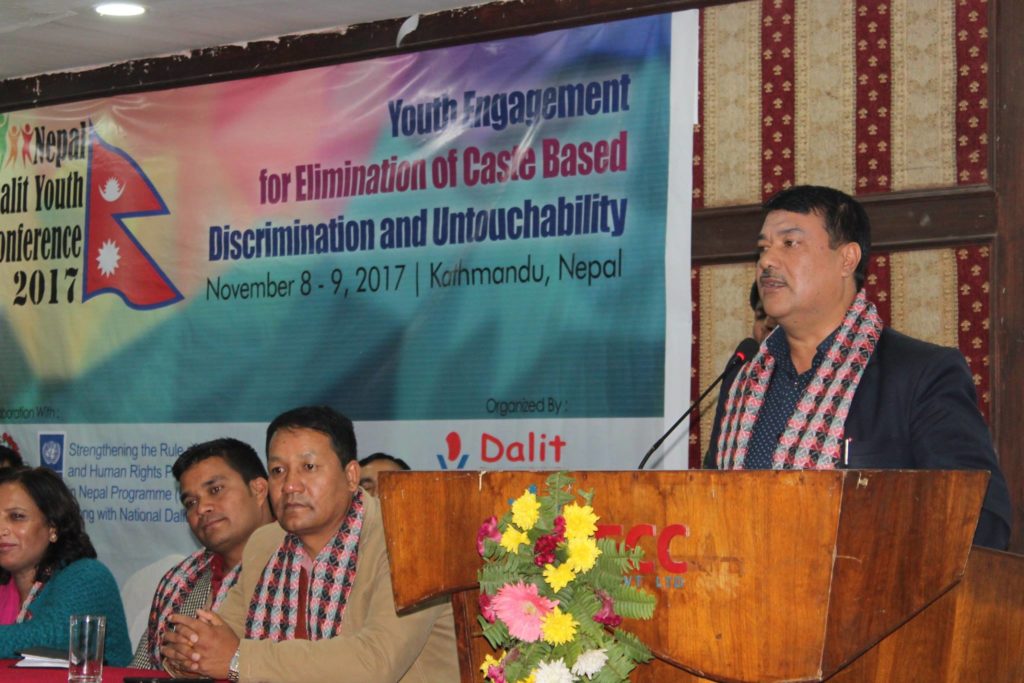

Participation of Dalit youth in the elimination of caste-based discrimination and ‘untouchability
April 26, 2019Nepal People’s Forum on Sustainable Development 2019 Thematic Statement: The 2030 Agenda/SDGs
August 29, 2019
NATIONAL SCHOOLING ON HUMAN RIGHTS
राष्ट्रिय मानव अधिकार शिक्षालय
About the School
DYA strongly believes that the knowledge of human rights should be a part of basic curriculum amongst the school-going children and is more relevant today in pursuant to the uprising human right violation in various issues like Crime against women, minorities, labor and other intersectional and cross cutting issues in Nepal. Dissemination of Human rights knowledge to the future generation (students from grade 8-12) seems to be the remedy and tapping on the sources in order to reduce such gross violation.
DYA and Society for International Law and Public Policy Collaboration with Buddhanilkantha Municipality through NSHR intends on teaching public school students from grade 8 to 12 about the importance of human rights and its obligations. The school will also focus on teaching Fundamental rights under ‘The constitution of Nepal’ and under Universal Declaration on Human Rights (UDHR). It will teach such rights from a young students mind set through creative methods of teaching like cartoons or role playing to young ones (5-8th grade) also making it informative and Lecture series and professional level simulation to older ones (9-10/12th) school going students.
NSHR is an effort to “…achieve the common understanding of rights and freedom and also an effort towards recognition of the inherent dignity and of the equal and inalienable rights of all members of the human family is the foundation of freedom, justice and peace in the world… (UDHR, Preamble)”. The school intends on teaching the aforementioned issues throughout the country in collaboration with other local government and Municipalities mandated by the Schedule 8 of constitution of Nepal intervening the social transformation through Dissemination of knowledge on International Human rights norms through Collaborative partnership with local Public /private schools.
III. National Schooling on Human Rights
Teaching methodology:
The national school intends on conducting a 5 days detailed sessions teaching students Rights & of the all and obligation towards the state and fellow beings at large. As good law-abiding citizen by abiding to general standards set through international Human rights norm.
- The School Intends on taking 2 Hours of lecture series to students from grade 6-9 and other 2 hours session to Students from grade 9- 12
- The sessions are scheduled for 5 days first two days are dedicated to two Sects of students for the purpose of deeper understanding to the senior school students and basic general understanding to junior students
- In addition, the other 2 days includes a simulation session, has peer role-playing models of teaching, which is based on the knowledge of earlier lecture sessions, these two days will be combine sessions.
- The last day includes certification to the schools and student on their obligation to abide by the human rights norm.
IV. Objective of the NSHR:
- To create general understanding of human rights norms on the basis of international conventions and the fundamental rights under the constitution of Nepal
- An effort to include general understanding of Human rights in basic school curriculum.
- To reduce all forms of discrimination and violence in the society and nation at large through dissemination of human right norms.
- To strengthen rule of law and create law-abiding future generation.
V. Discussion topics and schedule:
First two days sessions
Session I.
Introductory session 2 hrs
- Introduction to Law and Human rights
- Introduction to Constitution of Nepal 2072 and its fundamental rights
- Inalienable rights
- Dignity’s as primary obligation
- Rights against violence
Session II.
Social aspects in violence 1 hrs
- Legal remedy to violence
- Roles of peer at school
- Role of community as a unit in prevention and response
- Role of SILPP in providing counsel, attorney and free legal aid
- Rights Health and sanitation as basic Human rights
Third Day
Some key cross cutting issues to address:
- Towards “certainty of punishment” from “possibility of punishment”
- Combating stigmatization
- Obstruction of justice.
Fourth Day
- Simulation and role-playing:
Fifth Day
- Certification to the school and students along with promissory reminder
E. Intended outcomes:
Apart from an intense discussion, the school intends engaging Students and teachers to incorporate Human rights standards in their daily school routine also beyond School campus. SILPP also intends on providing free legal Aid to the student and schools at Large. By the end, the school intends on signing a promissory note with the school Principal teacher students, promising:
- To abide by Human rights norms inside the specific public school campus.
- To correspond with SILPP in cases violation of rights involving children and school as an institution.
- Gathering outcome of the sessions.
Thus, the School is not just limited to a single session series or discussion. It aims to bring forward the learning and addressing future problems.
The School, which will be the result of the contribution from Schools and locals government integrated effort towards Human Rights compliance. And NSHR is also a lobbying effort to bring Human rights education in school regular curriculum and syllabus.
Supported by :